Preface#
What is Time Series Analysis?#
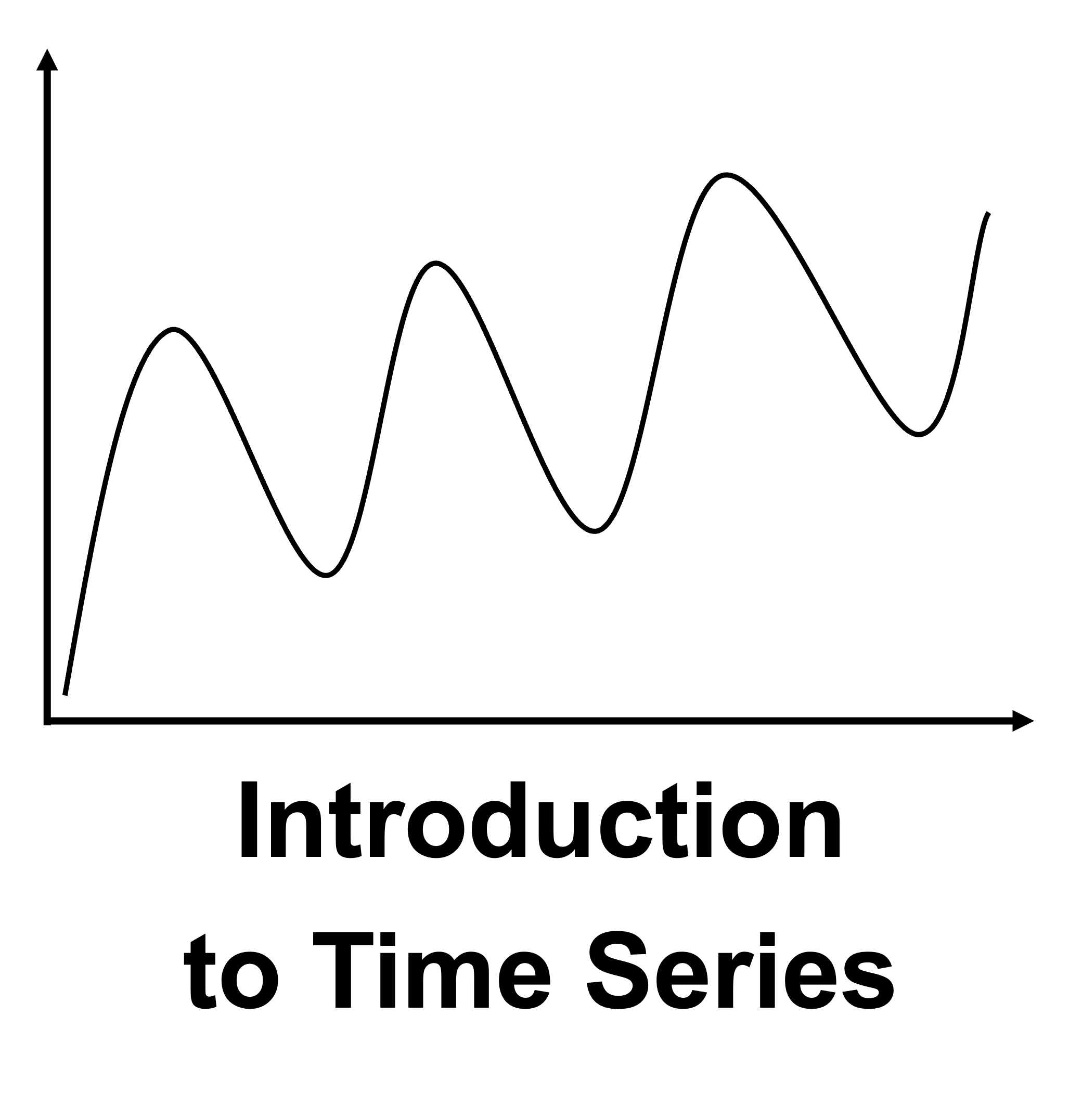
Time series analysis is the study of data collected sequentially over time, where the order of observations carries essential information about the underlying process. It provides tools to describe temporal patterns, understand system dynamics, and generate forecasts in domains such as finance, economics, climate science, engineering, and healthcare.
Why Time Series Analysis is Important?#
Time series analysis and modeling hold significant importance in contemporary academia and industry for several compelling reasons.
Temporal Structure and Dependence: Time series methods explicitly account for trend, seasonality, cycles, and autocorrelation, leading to models that better reflect how real-world processes evolve over time.
Forecasting and Planning: Accurate forecasts of demand, prices, loads, and other key indicators are critical for planning, resource allocation, risk management, and policy-making in both the public and private sectors.
Data Quality and Reliability: Time series workflows naturally address challenges such as missing values, outliers, and non-stationarity, improving the reliability of conclusions drawn from complex temporal data.
Versatile Modeling Toolkit: Modern time series analysis ranges from classical statistical models (such as exponential smoothing, ARIMA, and Kalman filters) to advanced signal transforms, neural networks, and reservoir computing, providing a rich set of tools for diverse applications.
Integration with Modern Data Ecosystems: Time series methods integrate seamlessly with contemporary data science libraries and platforms, enabling scalable analysis, automated forecasting, and deployment in real-time systems.
Transferable Skills for Education and Practice: Proficiency in time series analysis equips students and professionals with practical skills that are directly applicable to research, industry projects, and data-driven decision making.
Contents of the Course#
Basics of Time Series Analysis
This part introduces what time series are, how they differ from other data types, key concepts such as trend and seasonality, best sources for public datasets, and time series–specific cross-validation strategies.Missing Data in Time Series
Here, you will learn about types of missing data, how to identify patterns of missingness over time, and practical methods for handling missing values in time series datasets.Seasonality and Stationarity
This section focuses on understanding different forms of seasonality and the concepts of stationarity and non-stationarity in time series analysis, which are fundamental for many modeling approaches.Outlier Detection
In this module, you will explore techniques for detecting and classifying outliers, including seasonality-aware methods, visual approaches, and major statistical procedures tailored to time series data.Univariate Time Series Models
This part covers forecasting univariate time series using exponential smoothing, ARIMA, Seasonal ARIMA, and automated procedures such as auto_arima for model selection and tuning.Signal Transforms and Filters
Here, you will be introduced to signal-processing tools including the Kalman filter, Fourier Transform, Discrete Fourier Transform, and FFT, along with the properties and interpretation of these transforms for common signals.Prophet, GluonTS, Sktime, Neural Networks, and Reservoir Computing
This module presents modern forecasting frameworks and machine learning approaches, including Prophet, GluonTS, and sktime, windowed neural network approaches, multilayer perceptrons, recurrent neural networks, reservoir computing and Echo State Networks, dimensionality reduction with Principal Component Analysis, and an application to forecasting electricity consumption.Advanced Time Series Topics
The final part introduces emerging topics such as TimeGPT and other large language model–based approaches to time series analysis and forecasting.
Throughout the course, Python is used primarily as a practical tool for implementing these methods, with an emphasis on clarity and reproducible analysis rather than intricate programming details.
JupyterHub#
JupyterHub brings the power of notebook-based workflows to groups of users by providing each learner with a personal computational environment on shared infrastructure. It allows students, researchers, and data scientists to access pre-configured time series analysis environments without worrying about local installation or maintenance.
Key features of JupyterHub:
Customizable – JupyterHub can serve a variety of environments and user interfaces (such as classic notebooks or JupyterLab), making it easy to provide a consistent setup for this course.
Flexible – It supports pluggable authentication and controlled access, which is useful for managing course rosters and restricting resources to enrolled students.
Scalable – JupyterHub can be deployed using modern container technology and Kubernetes, supporting anything from a small class to deployments with thousands of users.
Portable – It is open-source and can run on commercial cloud providers, virtual machines, or institutional hardware, making it adaptable to different teaching and research contexts.
In this course, JupyterHub will be used to deliver a ready-to-use environment with the necessary libraries, datasets, and notebooks for time series analysis, accessible through a web browser.
Google Colab#
Google Colab, short for Google Colaboratory, is a cloud-based platform provided by Google that offers a free notebook environment to run and execute Python code in the browser. It can serve as a complementary environment for running course notebooks, experimenting with additional datasets, or continuing your work outside the institutional JupyterHub deployment.
Key features of Google Colab:
Jupyter-style Notebooks
Free Cloud Computing
Collaboration
Pre-installed Libraries
Storage and Version Control
Markdown Support
Code Snippets
Data Import and Export
Use of AI Tools#
To polish the writing, refine the accompanying code, and generate or enhance some of the images (with appropriate references wherever they are used), a combination of various AI tools was employed. These tools include proprietary systems such as ChatGPT, Google Gemini, Claude, and Microsoft Copilot, as well as several open-source AI models.
Copyright Information#
The lecture materials are protected under the Creative Commons Attribution 4.0 International License (CC-BY 4.0). This license permits almost any use, including copying, redistributing, and adapting the material for any purpose, even commercially. However, it requires that appropriate credit is given, a link to the license is provided, and an indication of whether changes were made. This ensures that the original author is acknowledged and that the license terms are followed.